- Select options This product has multiple variants. The options may be chosen on the product page

- Select options This product has multiple variants. The options may be chosen on the product page
- Select options This product has multiple variants. The options may be chosen on the product page
- Select options This product has multiple variants. The options may be chosen on the product page
- Select options This product has multiple variants. The options may be chosen on the product page
- Select options This product has multiple variants. The options may be chosen on the product page
- Select options This product has multiple variants. The options may be chosen on the product page
- Select options This product has multiple variants. The options may be chosen on the product page
- Select options This product has multiple variants. The options may be chosen on the product page
- Select options This product has multiple variants. The options may be chosen on the product page
- Select options This product has multiple variants. The options may be chosen on the product page
- Select options This product has multiple variants. The options may be chosen on the product page
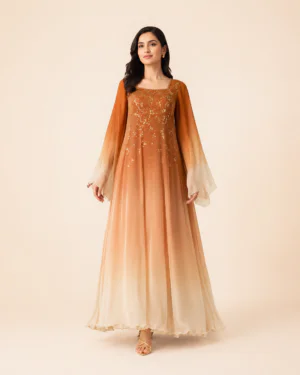


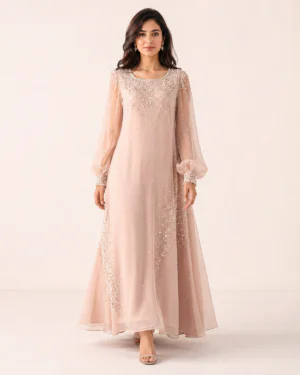


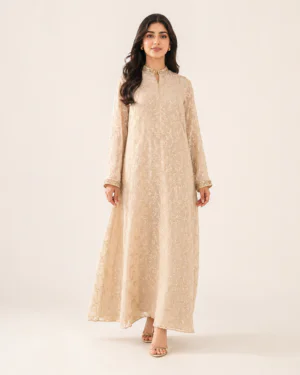


Chikankari Maxis — Soft Thread Embroidery from Pakistan’s Daytime Pret
Chikankari is the quietest kind of embroidery. It is also the most carefully made.
The technique traces back to Lucknow, where white thread is worked into white cotton in fine floral and vine motifs that you only see when you look closely. It moved across the border into Pakistani pret as a daytime register — chikankari maxis for a nikkah morning, soft cotton lawn pieces for an eid lunch, chiffon long frocks with chikan panels for summer wedding-guest appearances. The work is hand-considered, and the closer the eye gets, the more there is to read. The catalog leans into the soft register the technique earns.
What’s in This Collection
Chikankari maxis cut for Pakistani weather and Pakistani occasions. Cotton lawn bases that breathe through a long afternoon and don’t crease loudly through a four-hour event. Chiffon overlays where the embroidery sits across a yoke, a sleeve, or a panel at the hem. Soft palettes — cream, ivory, pale champagne, dusty pastel, the occasional rose-pink or sage — that let the white-thread work read clearly without competing. Some pieces use chikankari across the full surface; others place it as an accent across the bust, hem, or sleeve cuff.
When to Wear
A chikankari maxi handles daytime occasions across the Pakistani calendar. Nikkah mornings in cream or ivory. Walima brunch when the room is light and the colour palette is soft. Eid lunches at home or at a relative’s. Daytime engagement teas. A quiet evening that doesn’t ask for heavy zardozi or sequin work. The same piece often works across several of those occasions — chikankari has the kind of restraint that holds up across a season rather than belonging to one event.
Care
Chikankari work asks for a little care to hold its line over time. Hand-wash in cold water, wash light colours separately, do not bleach, iron on low heat, and dry in shade — the same care guide every Elrare maxi ships with. With basic attention, a chikankari piece holds its register across years of wear.
Sizing runs Small, Medium, and Large. Each piece ships fully stitched and ready to wear.
Within the Pakistani maxi range, chikankari maxis sit alongside designer frock for the universal vocabulary and wedding maxi for the formal end. The Cream Chikankari Maxi and the Sage Mirror Work Maxi are two clearly-embroidered pieces from this tag. For more on embroidery and finishing, see the embroidery section of the maxi guide.
Shop Elrare chikankari maxis online in Pakistan. Available in Small, Medium, and Large.