The right pret for an occasion is usually a question of register, not price.
A mehndi asks for one thing, a nikkah asks for another, and the dress that lands beautifully at a walima will read overdressed at an Eid lunch. Most of the work of choosing pakistani dresses for an occasion is matching the garment to what the evening already is — its formality, its lighting, its palette, and the way the room is dressed. The piece below walks through the eight occasions our reader writes to us about most often, the pret category that tends to land best for each, and what is worth leaving on the rail.
How occasion shapes the choice
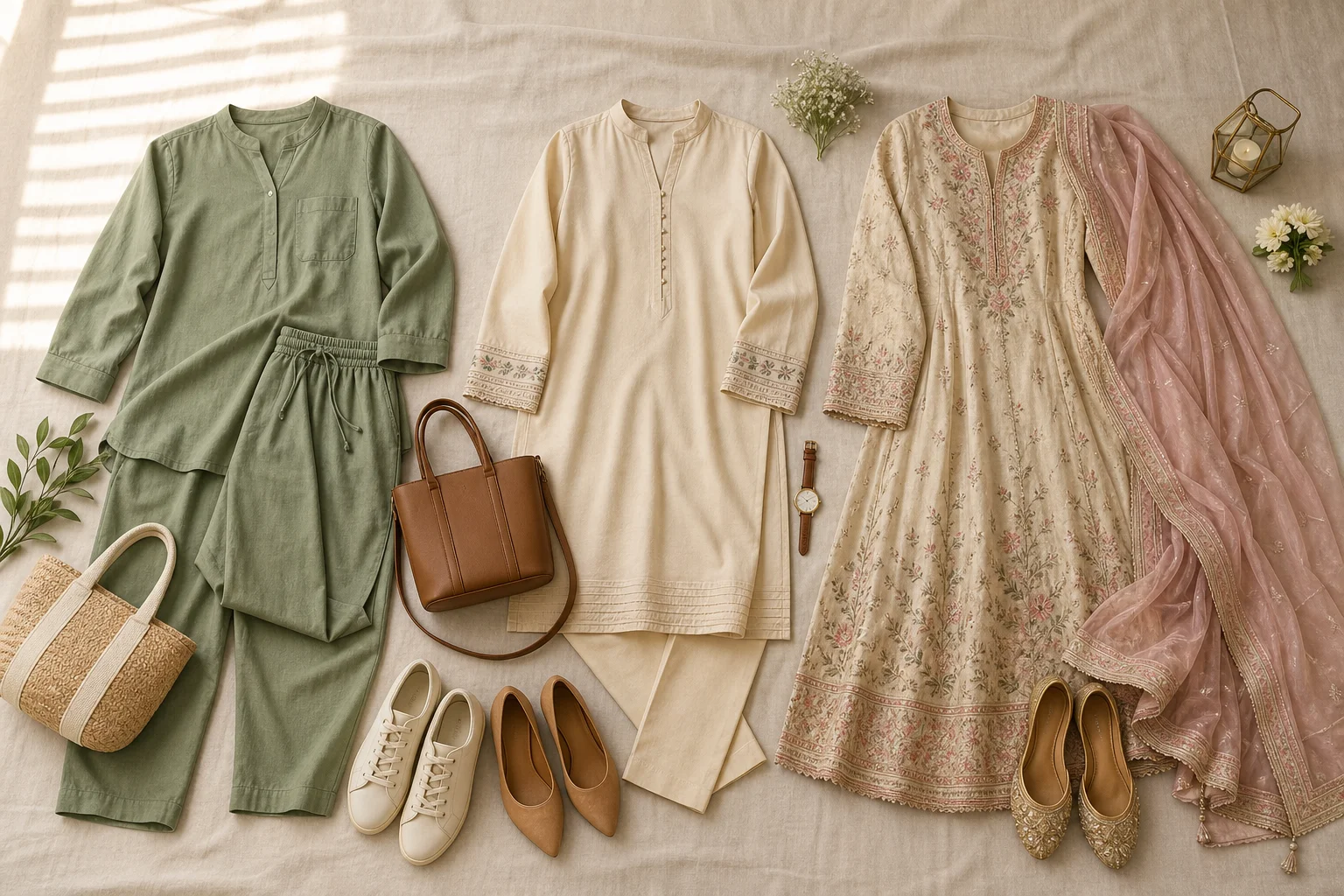
Three properties shift with the occasion, and most of the decision lives between them. Formality is the first — a walima sits at the top of the formal scale, a family Eid lunch sits halfway down, an everyday office is at the bottom. Fabric weight is the second — chiffon and organza read formal; cotton and crepe read mid-formal; jersey and breathable lounge knits read clean and modern. Embroidery density is the third — heavy zardozi or gota patti weight a piece toward festive evening; resham and schiffli sit comfortably across mid-formal occasions; clean unembroidered pieces hold their own at the formal end when the silhouette and fabric do the work.
A working principle we tend to come back to: dress half a notch below the most formal guest in the room, never half a notch above. The person who is overdressed at a casual evening is more visible than the person who is underdressed at a formal one, and the kind of considered dressing modern Pakistani pret makes possible is rarely about being the most-dressed person there.
The “considered dressing” register has shifted noticeably in the last two years — quieter palettes, less embroidery density, longer line. For the wider read on that shift across the whole Pakistani wardrobe, see how modern Pakistani fashion has moved in 2026.
Mehndi — colour and embroidery, weight that moves
The mehndi night is festive, daytime-leaning where it is held at home, and dance-friendly almost everywhere. The palette is bright by tradition — yellows, oranges, greens, magentas, and contrasting prints — and the silhouettes that work hardest here are ones that move.

From the catalog, the pieces that tend to land at a mehndi are embroidered maxis in flowing chiffon with resham or mirror work on the bodice, and embroidered co-ords in printed cotton or chiffon. Co-ords are an underrated choice for the mehndi — the trouser line keeps the silhouette dance-ready in a way a floor-length maxi sometimes doesn’t, and the matched fabric still reads as a complete look in photographs.
What to leave on the rail: heavy walima-style embellishment that sits poorly under bright daytime light, and pure black, which the cultural convention in Pakistan still tends to read as a wrong note at a mehndi. Both are technically wearable. Neither is the easy answer.
Nikkah — restraint that reads as care
The nikkah is the most considered of the wedding occasions. It is usually daytime, often white-ivory-pastel by convention, and the room is paying attention to the language of the contract being signed. The dress that works here is one that does not raise its voice.
A refined maxi in chiffon or crepe — ivory, blush, soft champagne, pale rose — with a clean silhouette and modest embroidery is almost always the right call. A minimalist embroidered co-ord in a soft palette works the same way. An ivory or pale-pearl kaftan lands beautifully on a daytime nikkah where the room is intimate and the register is closer to a family lunch than a wedding party.
What to leave on the rail: a mehndi-bright colour palette, heavy festive print, and anything that competes with the bride’s own ivory choice (a softer pearl or champagne is usually safer than pure white). The nikkah is one of the few occasions where restraint reads as the more thoughtful choice.
Baraat — the brightest beat of the wedding
The baraat is the festive maximalist evening — colour-led, photographed all night, and energy-high from the moment the groom arrives. The dressing register sits at the top of the festive scale.
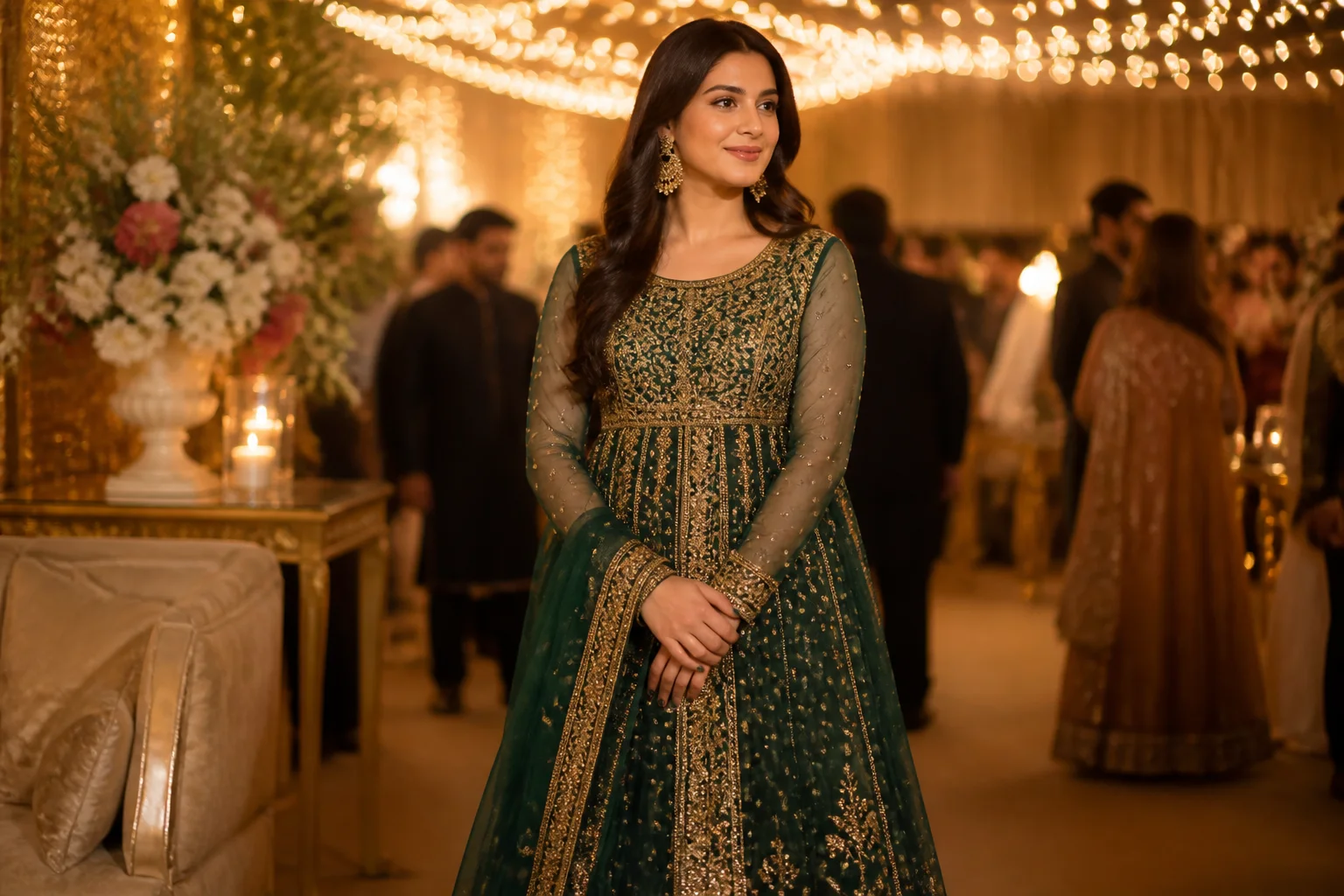
The pieces that work hardest here are embroidered maxis with structured silhouettes — empire waists, pintuck-pleated bodices, sheer-sleeve treatments — in jewel tones (emerald, sapphire, ruby, deep magenta) or rich neutrals (champagne, gold, bronze). For a less formal baraat held at home, a festive embroidered co-ord in a printed chiffon does the work without committing to a floor-length silhouette.
What to leave on the rail: pure ivory, which most modern Pakistani weddings still reserve for the bride at one of the events, and under-styled plain chiffon, which reads daywear under the baraat’s evening lighting. A baraat is one of the few occasions where the room expects you to commit to the festive register, and a quiet piece can read undercooked.
Walima — composed, formal, often muted
The walima is the formal evening of the wedding. The palette has shifted away from the baraat’s saturation toward champagne, blush, ivory-with-gold, jewel-rich neutrals, and deeper formal tones. The room is composed. The dressing register is composed with it.
A long maxi in chiffon or organza with considered embroidery — pintuck pleat, fine resham, schiffli, gota patti at the neckline or hem — is the default. An embroidered long maxi in a champagne or ivory tone tends to land especially well on a walima where the bride’s palette is in the same family. An embroidered kaftan in a deep formal tone is the right answer for a quieter walima where the silhouette is doing the work.
What to leave on the rail: mehndi-bright neon palettes, heavy contrast prints, and silhouettes that read playful (ruffle-led, very short sleeves). The walima is the evening of the wedding where the dressing should feel finished.
Eid — the family-and-friends register
Eid is the mid-formal occasion most of our reader’s pret wardrobe gets called on for. Lunches, visits, the cluster of social calls that fill the first day — the register is festive but breathable, and the dress should hold up across both a daytime visit and an evening dinner.

A mid-formal maxi in cotton, crepe, or breathable chiffon — printed, lightly embroidered, or in a clean colour-block — is the easiest answer. A clean co-ord in a soft printed cotton or a matching embroidered set is the second-easiest. A printed kaftan that can be worn through a daytime lunch and then into the evening is an underrated third.
What to leave on the rail: floor-sweeping formality for a daytime Eid lunch, walima-weight embroidery on a visiting day, and anything that has to be re-arranged every time you sit down at a relative’s house. The Eid register rewards a dress that lets you forget about the dress.
Dinners, parties, family gatherings
The semi-formal register covers most non-wedding social occasions — birthday dinners, work parties, monthly family gatherings, the slightly-dressed-up evening out. The dressing register sits halfway between Eid and walima.
A mid-formal maxi in a clean print or a quiet embroidered finish works almost every time. A printed co-ord in a mid-weight fabric reads modern and put-together without committing to floor-length. An exclusives piece — the small-run pieces we make in single design instincts rather than full collections — is the right call when the gathering is small enough that the dress will be noticed.
What to leave on the rail: walima-formal pieces, anything in mehndi-bright palettes (the dinner register does not ask for that energy), and heavy bridal-adjacent silhouettes. This is the register that rewards the considered middle.
Office, university, everyday
The everyday register is the cleanest. The work the dress is doing here is sitting well across a long day, reading polished without trying, and pairing easily with the same shoes and bag every time.
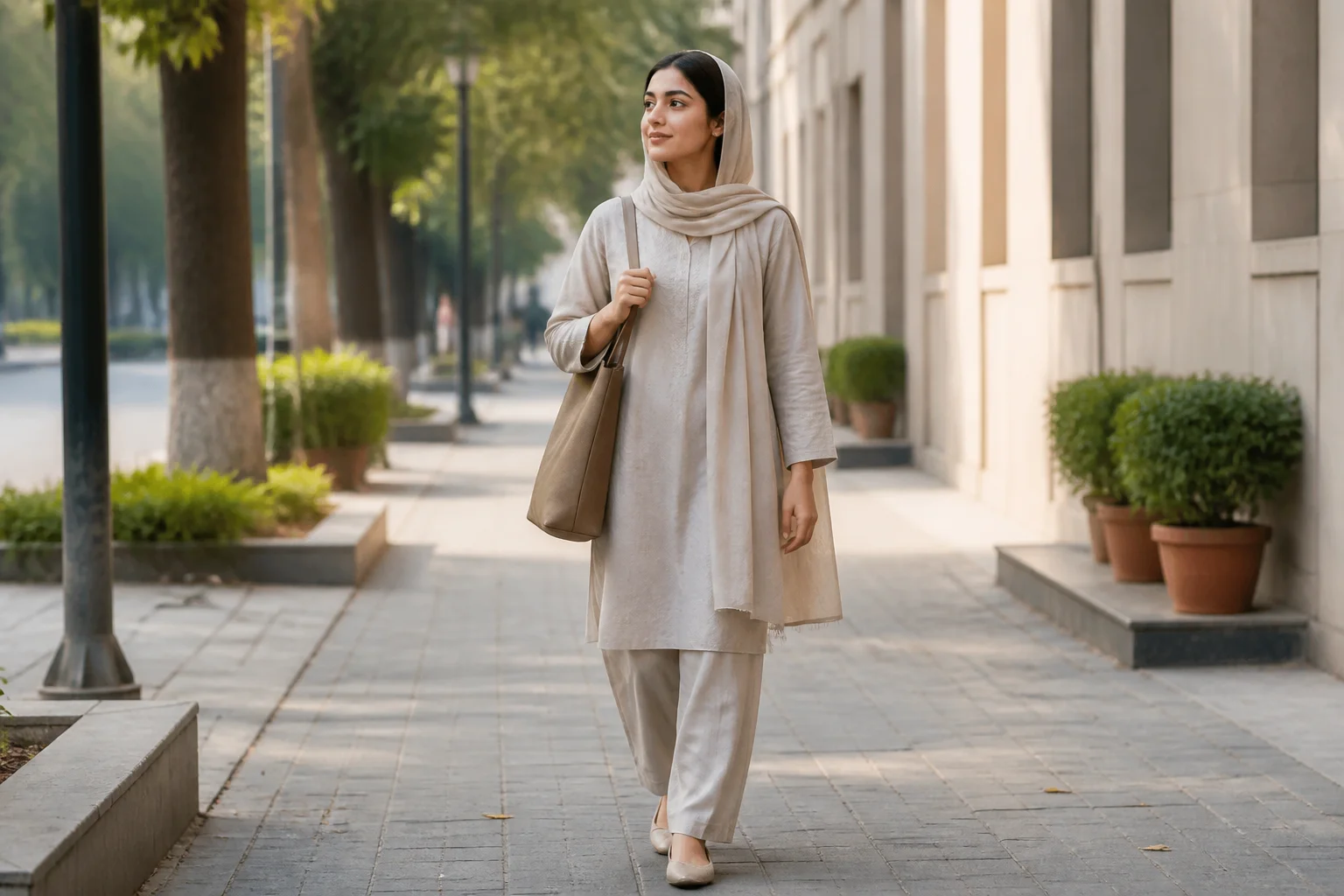
A tunic and trousers in cotton or breathable crepe is the long-standing answer — clean cut, modest length, finished in-house before it leaves us. A plain co-ord in a soft solid reads modern and put-together. Lounge wear that has been cut to read like daywear — clean lines, no visible drawstrings, considered fabric — works for the day that moves from a meeting to a coffee to a family stop without time to change.
What to leave on the rail: embroidery-heavy festive pieces (overdressed for everyday, underdressed for the occasion they were made for), anything that requires careful pressing every morning, and prints that read trend-forward in a way the everyday register usually doesn’t reward.
What to skip — when an occasion deserves restraint, not effort
The most common over-dressing mistake we see, in the questions our reader writes to us, is wearing walima-formal to an evening that is meaningfully smaller — a family dinner, a friend’s birthday, an Eid lunch that turned into an evening visit. The room reads the over-dressing as a misreading of the occasion, not as effort.
The fix is rarely a different dress. It is usually one notch down in fabric weight, one notch down in embroidery density, and the same considered silhouette. A walima-weight maxi in chiffon at a family dinner is overdressed; the same silhouette in a clean crepe with quieter embroidery is exactly right. The discipline that makes a good buyer’s guide to Pakistani designer dresses work is the same one that makes day-to-day dressing work — match the register, then commit to it.
Frequently asked questions
What is the right dress for a mehndi in Pakistan?
A maxi or a co-ord in a bright, daytime-friendly palette — yellows, oranges, greens, magentas — with resham, mirror work, or schiffli embroidery and a silhouette that moves comfortably for dancing. Heavy walima-weight embellishment and pure black both tend to read as a wrong note at a mehndi.
Can you wear a maxi to a nikkah?
Yes — a refined chiffon or crepe maxi in ivory, blush, champagne, or a quiet pastel, with clean embroidery and modest cut, is one of the most reliable choices for a nikkah. The piece should sit a notch below the bride’s palette, which usually means a softer pearl or champagne rather than pure white.
What colours should be avoided at a walima?
Mehndi-bright neon palettes — bright yellow, electric orange, hot magenta — tend to read out of register at a walima, where the palette has shifted toward champagne, blush, ivory-with-gold, jewel tones, and rich neutrals. Pure ivory is still avoided at most modern Pakistani weddings out of consideration for the bride.
Is a kaftan formal enough for Eid?
A printed or lightly embroidered kaftan is one of the more comfortable answers for an Eid day that moves from a lunch to an evening visit. For a more formal Eid evening, an embroidered kaftan in a deep tone or a long embroidered maxi will land closer to the evening register.
What is the difference between baraat and walima dresses?
A baraat dress is festive maximalist — jewel tones or rich neutrals, structured silhouettes, photographable from across a hall. A walima dress is composed and formal — champagne, blush, ivory-with-gold, jewel-rich neutrals, with considered rather than maximal embroidery. The baraat asks for colour and energy; the walima asks for finish and restraint.
Can the same dress work for nikkah and walima?
Rarely — the nikkah palette sits in pale ivory, blush, and soft champagne, while the walima palette has more saturation and embroidery weight. A piece that reads as just-right for a daytime nikkah will usually read as undercooked at an evening walima of the same wedding.
What pret category is best for a daytime wedding event?
For a daytime mehndi, an embroidered maxi or co-ord in a bright palette. For a daytime nikkah, a chiffon or crepe maxi in ivory or pale pastel, or a soft-toned kaftan. For a daytime walima (less common but increasingly so), a long embroidered maxi in champagne or blush, with a lighter fabric weight than an evening walima would call for.