
Two words point at the same shelf.
A Pakistani woman shopping online for a kameez, a maxi, or a co-ord set will see “pret” on one brand’s site and “ready to wear” on another. The garments are the same. The vocabulary tells you something else — about who is selling, who is buying, and how Pakistani womenswear has quietly shifted over twenty years. This piece is for the buyer who wants the words sorted out and the shift explained, so the next purchase is made with full understanding of what category it sits in.
For the definition of pret, the definitional explainer covers the word itself in depth. For the broader picture across catalog, fabric, and occasion, see the full Pakistani pret guide.
Two words, one shelf
Ready to wear is the consumer-facing term. It describes a finished garment, made to a size chart, sold in a store or online, ready to wear straight out of the package. No tailor needed, no alterations expected. The buyer picks a size and orders.
Pret is the trade term. Short for prêt-à-porter — French for ready to wear. In Pakistani fashion writing, “pret” is the word the industry has used for two decades to distinguish finished, designed, sized garments from the unstitched fabric tradition that used to be the default. A brand sells “pret” the same way a Karachi mill used to sell “unstitched lawn.” It is a category label as much as a description.
In Pakistan today, the two words point at the same garment. A Sapphire pret kurta and a Khaadi ready-to-wear kameez are the same thing — a finished, sized, design-house-made piece. The shift between the words is not in the product; it is in the register of the conversation.
Where the two words come from
Both terms travelled here from different fashion economies.
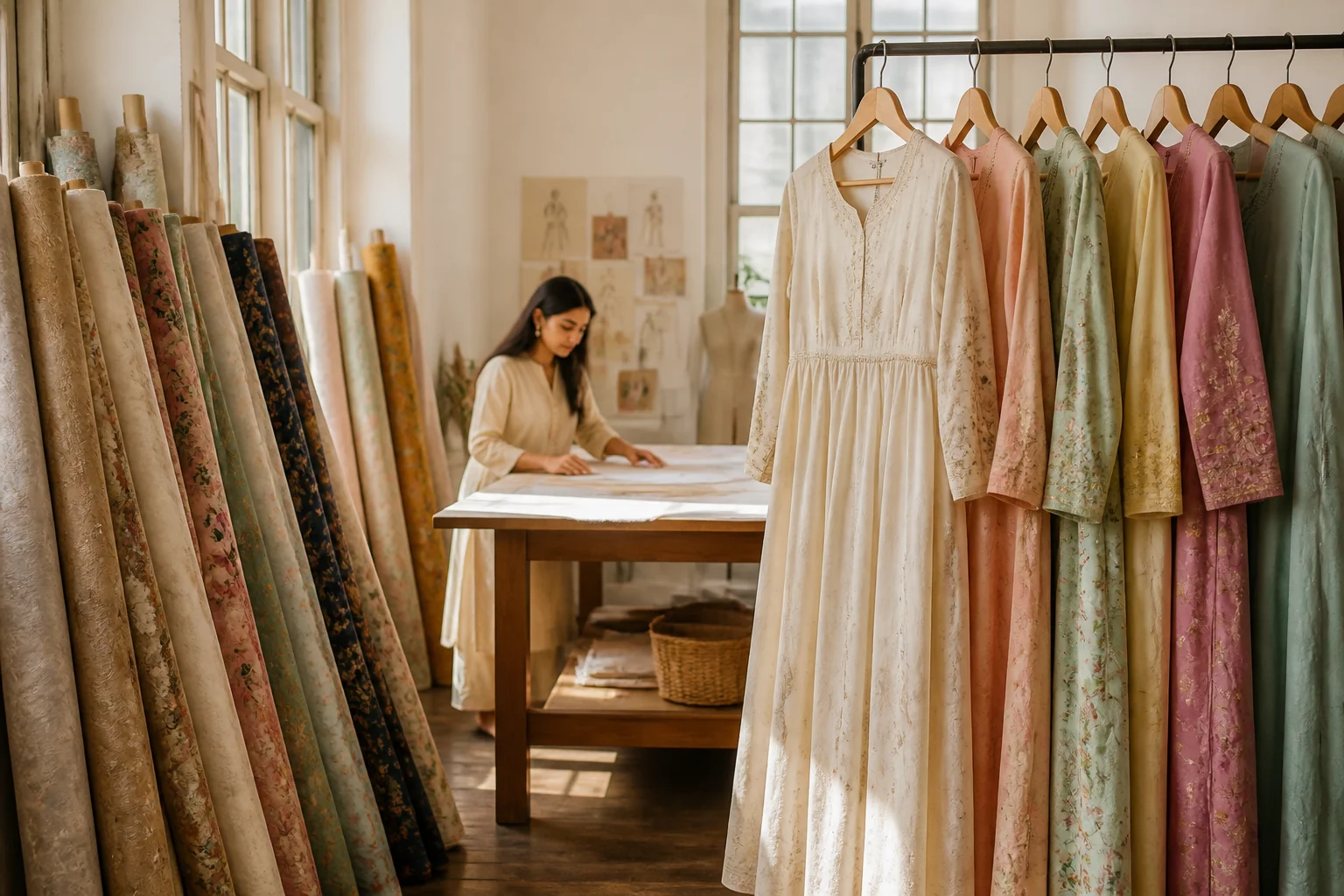
Prêt-à-porter came from mid-twentieth-century French couture. As haute-couture houses began producing standardised-size collections alongside their bespoke commissions, “prêt-à-porter” — translated, “ready to be carried” — became the trade term for the finished, off-the-rack tier. The word migrated into English fashion press and from there into Pakistani magazines and brand marketing in the 1990s and 2000s, where it shortened to “pret” in common usage.
Ready to wear came from American department-store retail. Sears, Macy’s, and the catalogue houses popularised the term for mass-produced clothing in standard sizes — the alternative to the bespoke tailor. It is older, plainer, and never carried the French-couture prestige that “prêt-à-porter” did. In Pakistan, it arrived through American TV, online retail, and the search bar.
Neither word is a translation of an Urdu term, and neither belongs more natively here than the other. They are both English-language imports, and they have both made themselves at home in Pakistani fashion vocabulary.
Who uses which word in Pakistan
A clean observation: the trade uses “pret,” and consumers increasingly say “ready to wear.”
A Pakistani brand’s marketing copy is more likely to call its collection a “pret line.” A Pakistani buyer, searching Google for a maxi or a tunic, is more likely to type “ready to wear” — the head term gets 2,900 monthly searches in Pakistan, against around 2,400 for “pret.” The trade word is older and carries a small premium signal; the consumer word is plainer and travels further on a search bar.
Older buyers, especially those who grew up reading glossy Pakistani fashion magazines, often say “pret” by default. Younger buyers, who came of age shopping online, often say “ready to wear” — or just don’t reach for either word, and say “stitched” or “finished” or “in my size.” Neither use is wrong. The trade and the buyer are converging on the same shelf from two directions.
How ready to wear became Pakistani fashion’s new default
The shift from tailor-default to ready-to-wear-default happened over roughly twenty years, and it is the bigger story behind the vocabulary.
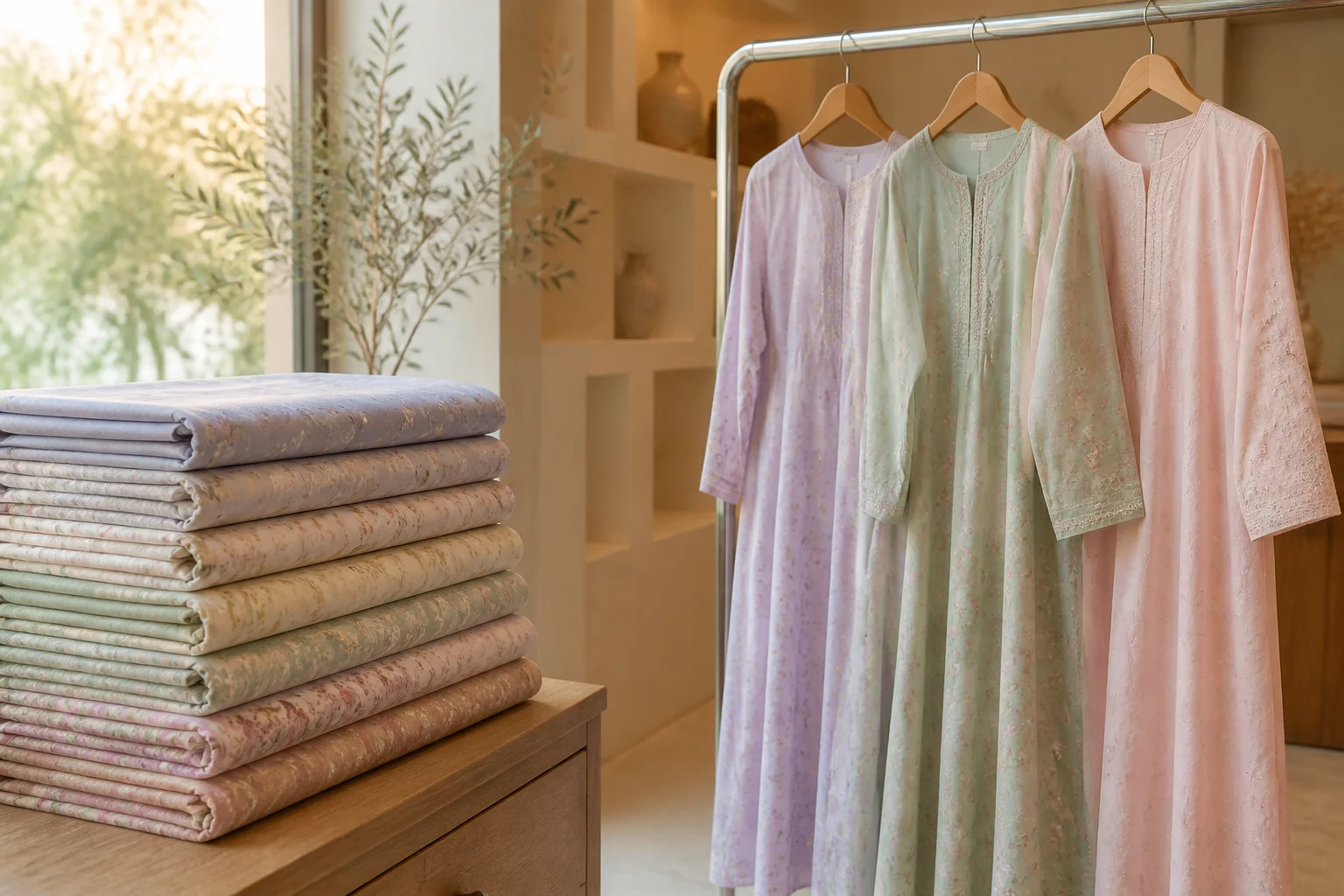
Twenty years ago, the default for most Pakistani women was unstitched. A new outfit meant a fabric purchase plus a stitching appointment with the family tailor, and the timeline was weeks. Brands sold fabric; the tailor sold the garment. Pret existed at the top of the market, mostly for the designer-occasion piece. The mass middle was tailor-made.
Three things changed.
Sizing charts at Pakistani brands got reliable enough. Through the 2010s, the national brands invested in standardised sizing — a Small at one house started meaning something close to a Small at another. The risk of buying a finished garment online without trying it on dropped. Returns and exchanges became normal. The buyer learned that her S/M/L sat predictably across brands she trusted.
Online retail grew nationally, and ready-to-wear was the format that worked through a courier. Unstitched fabric can be shipped, but the full pret–tailor loop cannot. The brands that built online operations through the 2010s found that finished garments converted better than fabric. A piece in her size on a Tuesday beat fabric plus a four-week wait.
In-house design studios matured. Brands stopped being textile mills with a stitched range and became studios producing seasonal collections of finished garments. The piece on the rail started feeling designed, not stock. The buyer paying for a pret maxi was paying for a design house’s cut, not for an off-cut from a textile printing line.
The result is that by 2026 the default has flipped. Most Pakistani women buy ready to wear most of the time. The tailor relationship still exists — alterations, hem adjustments, the occasional bridal commission — but it sits below ready-to-wear in volume, not above. This is the older, real binary buyer-decision that the cluster covers in depth in pret versus unstitched.
The aesthetic register of that 2026 default has shifted alongside the vocabulary — quieter palettes, considered embroidery, longer line. For the wider read on those shifts, see the aesthetic context for modern Pakistani fashion.
What “ready to wear” actually buys you in Pakistan now
The vocabulary is one thing; what the buyer actually receives is another. A premium ready-to-wear piece from a Pakistani design house in 2026 means a specific set of properties.
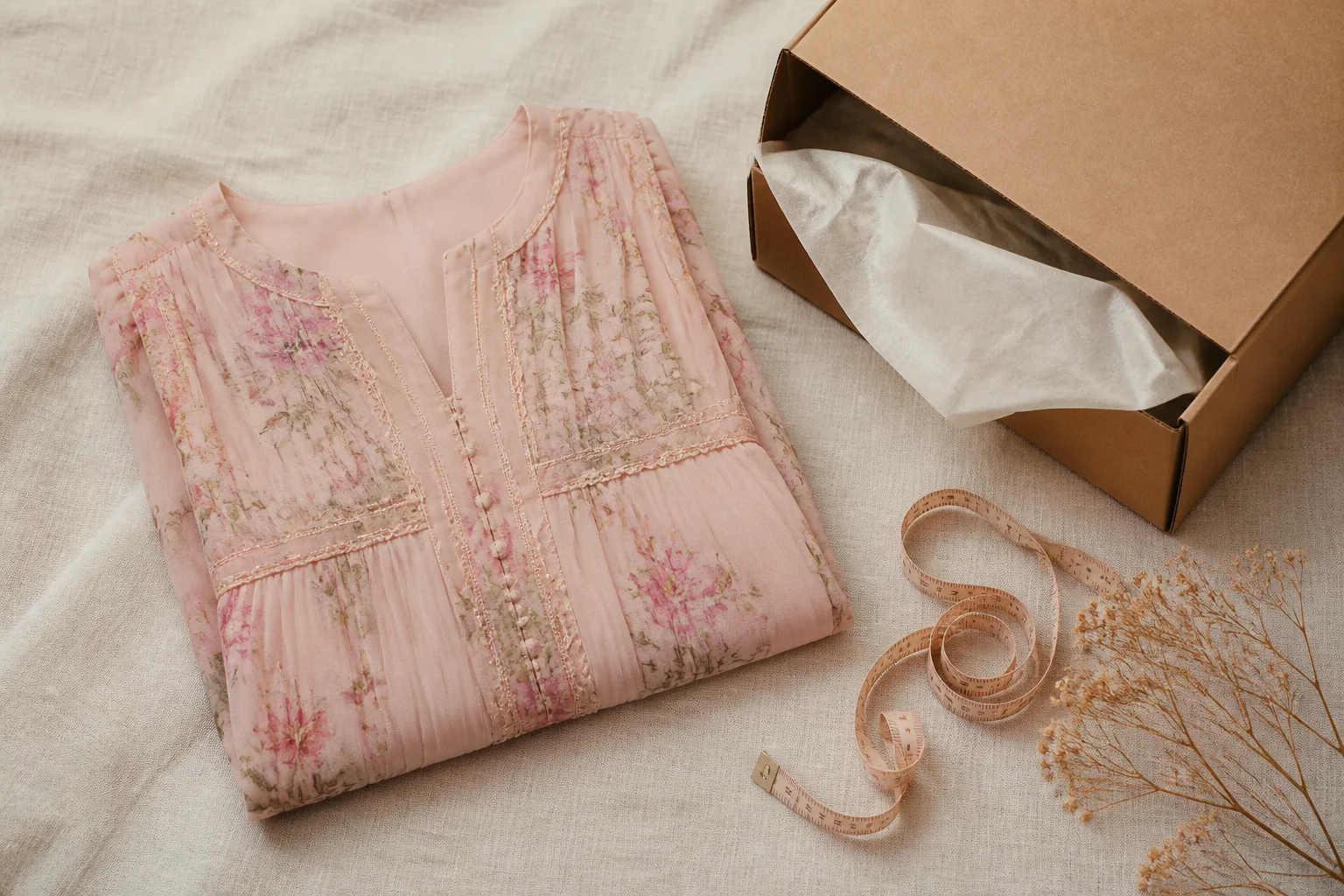
A designed cut. The silhouette is the design team’s call — A-line, empire waist, pintuck, bow-tie, kaftan-cut, palazzo. The cut is the design decision, and it is what separates the piece from a tailor-replicated version of the same shape. Fabric, fit, and finishing in Pakistani pret unpacks how those three properties read on a real garment.
Finished construction. The seams are finished, the hem is set, the neckline and sleeve cuffs are completed in-house. The buyer is not paying a tailor at the other end; the studio has done the work upstream.
Modesty as a design property. A ready-to-wear house that builds modest cuts into the line — modest necklines, full coverage at the shoulder, full-length sleeves where stated — names modesty in the same register as fabric weight or sleeve length. The buyer does not need to translate a tailor’s cut into a modest version. The cut is already there.
S/M/L sizing with published measurements. Bust, waist, and hip measurements on a chart. The buyer matches her actual body to the chart and orders. The sizing chart is the contract — the brand has agreed to make a garment that fits a body at those measurements.
Ship-ready turnaround. Two to five days nationally in Pakistan, by courier. No tailor visit, no fitting appointment, no four-week wait. The piece arrives, it fits, it is worn.
For the longer read on what to look for in a designer Pakistani piece across all these properties — fabric, cut, finishing, sizing, design integrity — see the Pakistani designer dresses buyer’s guide.
The Elrare maxis collection is built around exactly that — designed cuts, finished in-house, sized to S/M/L, ready to ship across Pakistan.
When the language matters
Most of the time, “pret” and “ready to wear” are interchangeable and the buyer does not need to think about which word to use. Three contexts are exceptions.
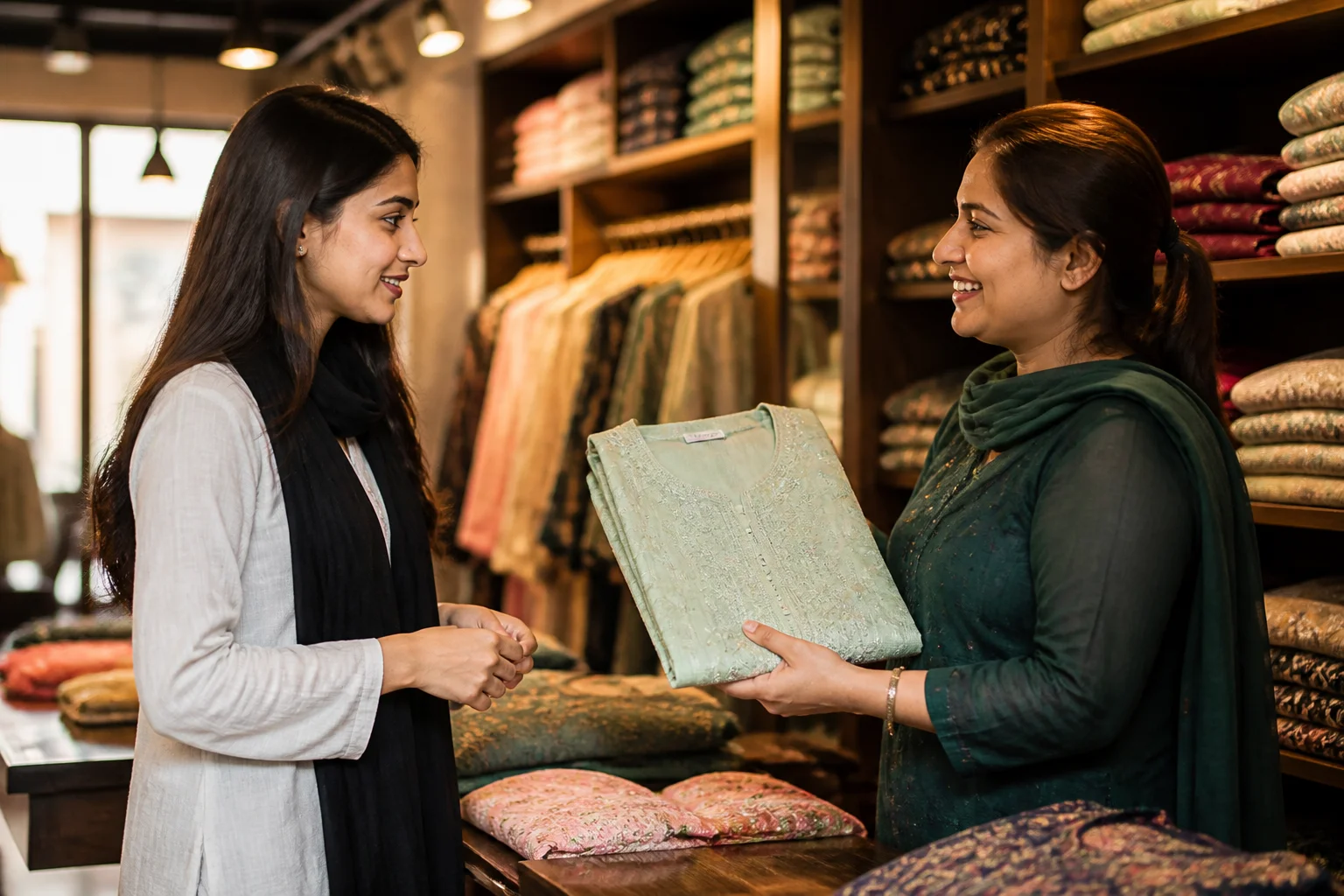
Searching online. Search engines see the two words as related but not identical. A Pakistani buyer typing “ready to wear” finds slightly different SERPs than one typing “pret.” Brands that publish in both vocabularies cover both intents; brands that publish in only one miss the other. As a buyer, knowing both words doubles the catalog she can reach.
Beyond the vocabulary itself, the practical online-buying decision has its own guide — the practical buyer’s guide to Pakistani dresses online covers product photography, size charts, fabric descriptions, and return windows.
Communicating with sellers on WhatsApp and in shops. Some sellers use “pret” as a category label and “ready” as a stock status — confusing if the buyer thought the words were synonymous. Asking “is this ready to wear or unstitched” lands cleanly; asking “is this pret” can return “yes, it’s our pret line, but it’s unstitched” if the brand uses the word as a tier marker rather than as a description.
Describing your buying preferences to a tailor. If a Pakistani buyer says “I want this in a ready-to-wear style,” a tailor understands she wants a finished, sized look — not a custom-fitted version. The word carries a request for a specific kind of cut, not just an adjective.
The closer answer is that the vocabulary is rarely a problem, and most of the shopping life of a modern Pakistani woman happens without needing to pick a word. But when the words come up, knowing they point at the same shelf and what each one signals saves a small amount of friction.
Ready to wear is the format Elrare is built around — designed cuts, finished in-house, sized to S/M/L, ready to ship across Pakistan. For the wider context on how Pakistani pret works and what the catalog covers, see the pret guide.
FAQ
Is ready to wear the same as pret in Pakistan?
Yes. The two words point at the same garment — a finished, designed, sized piece sold off the rack or online by a design house. “Pret” is the trade term, short for prêt-à-porter; “ready to wear” is the plainer consumer-facing term. In Pakistani fashion vocabulary, both are used interchangeably. For the definitional read, the explainer covers the word in depth.
Why are there two words for the same thing?
The two words travelled to Pakistan from different fashion economies. Prêt-à-porter came from French couture in the mid-twentieth century as houses began producing finished collections alongside bespoke. Ready to wear came from American department-store retail, where it described mass-produced clothing in standard sizes. Both English-language imports made themselves at home in Pakistani fashion vocabulary and now coexist.
Why is ready to wear now the default in Pakistan?
Three drivers, all maturing through the 2010s. Pakistani brand sizing charts got reliable enough that a Small at one house meant something close to a Small at another. Online retail grew nationally, and finished garments shipped well through couriers in a way that unstitched-plus-tailor did not. And in-house design studios matured — brands became studios producing seasonal collections of designed pieces, not textile mills with a stitched range. By 2026 most Pakistani women buy ready to wear most of the time.
Is ready to wear cheaper than getting something stitched?
Not always cheaper, but usually a fairer all-in price. Ready to wear bundles fabric, design, cut, and finishing into one price. Unstitched separates the fabric cost from the tailor cost, and a competent tailor for an equivalent silhouette is not free. A premium ready-to-wear piece from a Pakistani design house often lands close to the all-in cost of premium unstitched fabric plus a tailor for the same silhouette. The ready-to-wear tier saves time and reduces variability; unstitched buys exact fit.
Does ready to wear mean lower quality than tailor-made?
No. A pret design house’s pattern and finishing usually beat tailor-level work on consistency — the cut is repeated across a season, the seams are finished to a studio standard, and the hem is set the same way every time. The trade-off is not quality; it is exact fit. A tailor cuts to one body. A ready-to-wear piece is cut to a size chart. For a body that sits cleanly inside the chart, ready to wear is the better answer. For a body that sits hard between sizes, stitched-to-order or unstitched still has an edge.
Two words, one shelf, one shift. The vocabulary will keep moving; the default is settled.